A Custom Helmet Peak Mold Fee: What Are You Actually Buying?
Before paying for a custom helmet peak mold, match the part revision, tool holder, design-use rights and sample acceptance to the same written agreement.
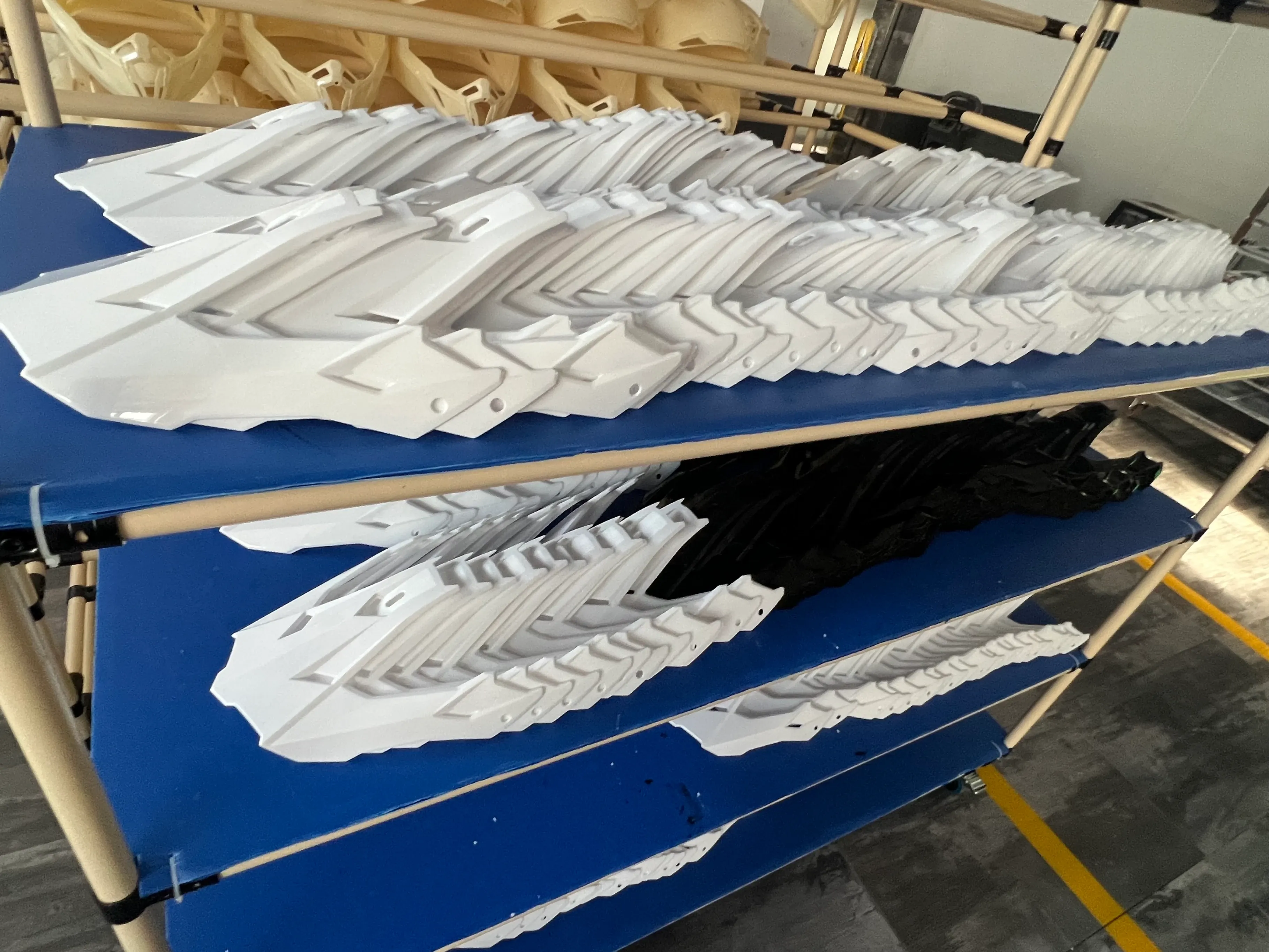
Your private-label helmet project needs a peak with a revised shape. The supplier quotes a one-time mold fee. Before approving payment, ask a narrower question: which exact part, tool and rights does that fee cover?
This is a purchasing check, not a statement that any Taotao model needs a new mold. The photograph shows helmet-related components from a Taotao business visit. It does not establish who owns a particular tool or whether a part passes a standard.
First, freeze the part definition
Ask the supplier to put the helmet model, peak part number, drawing revision, material specification, attachment interface and intended sample acceptance criteria on one tooling schedule. A tooling quote that says only “peak mold” does not identify what will be made. If the peak design changes after the first sample, establish who approves the revision and whether the change affects cost or schedule. Price, MOQ, lead time and production capability for the specific project remain to be confirmed.
Then separate the tool from the design
A physical mold may remain at a factory even when a buyer funds it. Design files, new design work, permitted supplier use and transfer of the physical tool need their own written terms. WIPO guidance on supplier IP agreements recommends defining pre-existing and newly created IP, supplier use and what happens when the relationship ends. UK government guidance notes that paying for work does not automatically settle ownership of created IP. The contractual result depends on jurisdiction and signed terms; obtain legal advice where it matters.
Four checks before approving the mold fee
- Tool identity: Match the tool ID, peak part number, drawing revision and payment milestone to the quote, purchase order and sample record. Is this the tool you are funding?
- Custody and release: Match storage, maintenance, permitted use and release terms to the legal names of seller, manufacturer and tool holder. Could the tool be located and transferred if production moves?
- Design-use rights: Match existing design files, new work and revision rights to the approved design version. Who may use the design after a change?
- Sample acceptance: Match the physical sample and acceptance criteria to the exact helmet model and peak interface. Is the sample ready for technical review, not just visually attractive?
Do not confuse tooling acceptance with helmet compliance
A good-looking peak sample does not establish the finished helmet's destination-market compliance. Obtain evidence for the exact finished model and applicable market separately. Do not assume a certificate, test result or marking for one model or revision covers another.
Continue when the tool, part revision, entity names, rights and acceptance steps are written and consistent. Pause when a missing tool ID or transfer term can still be clarified before payment. Escalate when the quote, invoice, manufacturer and tool holder disagree without documentation, or when ownership and design-use terms conflict. Seek independent legal or technical review before a material commitment.
If you are evaluating a custom helmet or visor component, send Taotao Trading the target market, exact model/part reference and a redacted tooling schedule. We can identify the document gaps to resolve before your payment decision. Start an inquiry.