Aug 5, 2026Industry Insights
EN 1154 Door Closer Supplier: What to Verify Before You Buy
A practical guide to EN 1154 grades, CE marking, DoP documents and model-level verification when sourcing door closers from China.
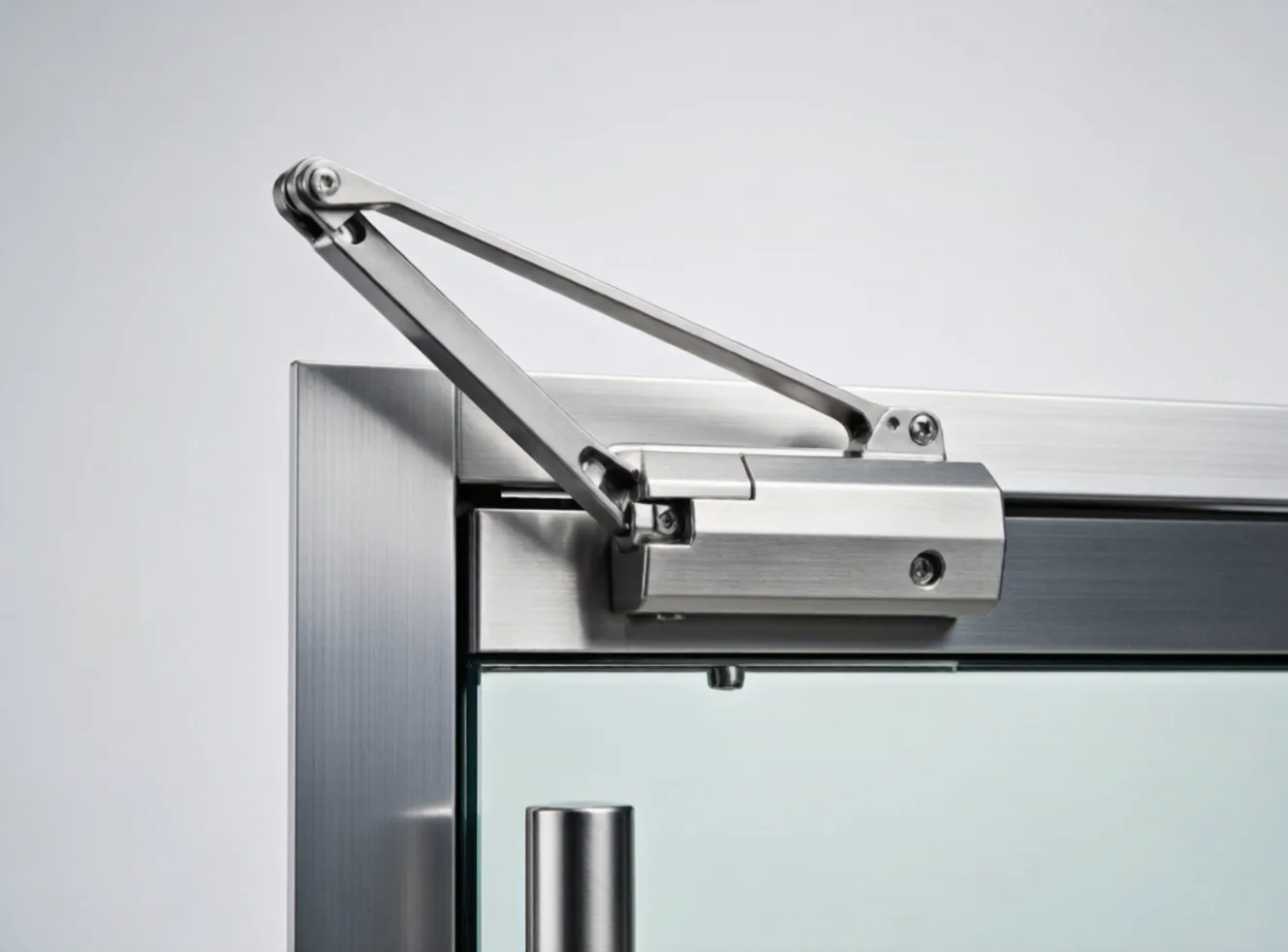
A sourcing guide written by an exporter who gets asked the wrong questions every week.
If you search for an EN 1154 door closer supplier, you will find hundreds of listings that say the same two words: CE certified.
Two words. No numbers. No grades. No declaration of performance.
That phrase, on its own, tells you almost nothing — and if it is the basis on which you shortlist a supplier, you are going to have a difficult conversation with your project engineer later.
This article covers what to actually verify. It is written from the supplier side, which means it also tells you which questions make a factory uncomfortable, and why that discomfort is useful information.
What EN 1154 actually is
EN 1154 is the European standard for controlled door closing devices. For products placed on the EU market under the Construction Products Regulation, buyers should verify the applicable CE marking and Declaration of Performance (DoP) requirements for the exact model.
The standard covers several things at once, and a supplier claiming compliance should be able to state all of them:
- Closing force grade — EN1 to EN7
This is the single most important number, and the one most often omitted.
EN 1154 classifies closing power on a seven-point scale, matched to door leaf width and mass. Roughly:
Grade
Typical door leaf width
Typical door mass
EN 1
up to ~750 mm
up to ~20 kg
EN 2
up to ~850 mm
up to ~40 kg
EN 3
up to ~950 mm
up to ~60 kg
EN 4
up to ~1100 mm
up to ~80 kg
EN 5
up to ~1250 mm
up to ~100 kg
EN 6
up to ~1400 mm
up to ~120 kg
EN 7
up to ~1600 mm
up to ~160 kg
Indicative values — always refer to the current published version of EN 1154 and to the DoP for the specific model.
A closer rated EN 3 and a closer rated EN 6 are not two versions of the same product. Specify too low and the door will not latch reliably against seal compression or air pressure. Specify too high and the door becomes difficult to open — a genuine accessibility problem, and in many jurisdictions a regulatory one.
- Durability — 500,000 cycles
EN 1154 requires testing to 500,000 opening and closing cycles. Ask whether the test report covers the model you are buying, or a “representative” model from the same family. These are not the same thing, and the difference matters when a specifier audits your submittal.
- Corrosion resistance
Graded via salt spray testing. Relevant for external doors, coastal projects and high-humidity environments. If your project is any of these, the grade needs to be on the DoP, not implied.
- Fire behaviour
A door closer intended for a fire door must be tested as part of the complete door assembly under EN 1634-1. A closer is never “fire rated” on its own — it is approved as part of a tested configuration. Any supplier who tells you their closer is “fire certified” without reference to a door assembly test does not understand the standard they are quoting.
- Related standards
EN 1155 — electrically powered hold-open devices, used where closers must integrate with fire alarm systems
EN 1158 — door coordinator devices for double-leaf doors
The question that separates suppliers
When a factory tells us “we are CE certified,” here is the question we ask:
Which EN 1154 grades do you cover, and is the closing force adjustable across a range on a single model?
If a supplier cannot answer this clearly, investigate further before shortlisting the model.
This matters commercially, not just technically. Adjustable-force closers — typically EN 2–4 or EN 3–6 on one body — significantly reduce your SKU count and your inventory risk. Instead of stocking five fixed-grade models across a project, a distributor can stock one or two adjustable units and set force on site.
For project work, where door schedules change during construction more often than anyone admits, this is not a minor convenience. It is the difference between adapting on site and reordering.
So when you evaluate an EN 1154 door closer supplier, ask for the grade coverage in writing. Not “CE certified.” A range.
Documents to request before you place an order
Ask for these four items before placing an order. Availability and applicability should be confirmed for the exact model quoted.
- Declaration of Performance (DoP)
Check that the model number on the Declaration of Performance matches the model on your quotation. A mismatch between a declaration, test document and offered model can create problems during project approval or audit.
- Full test report from a notified body
Not a certificate summary. The report. It should show the tested grade, cycle count, and the identity of the testing body.
- Photographs of the CE marking as applied
On the product and on the packaging. Legibility and placement are part of compliance, not decoration.
- Packaging compliance documentation
Regulation (EU) 2025/40 on packaging and packaging waste generally applies from 12 August 2026. It maintains a 100 mg/kg combined limit for lead, cadmium, mercury and hexavalent chromium in packaging. Its specific PFAS concentration limits apply to food-contact packaging, so they should not be presented as a general PFAS rule for door-closer cartons. Packaging, recycling and producer-responsibility obligations should be checked for the actual materials and destination market. See the official regulation.
Door closers are typically shipped in printed cartons with foam or moulded inserts, sometimes with coated moisture-barrier liners. All of it counts as packaging. So does the stretch film, the strapping and the desiccant.
For EU shipments, ask the supplier what packaging materials are used and what compliance evidence is available for the destination market. Confirm the final requirements with your importer, compliance adviser or relevant national authority before production.
If you are buying for the US market instead
The European framework does not transfer. For the United States:
ANSI/BHMA A156.4 — the applicable standard for door controls, with Grade 1, 2 and 3 classifications. Grade 1 is the commercial/institutional specification.
UL 10C — positive pressure fire door assembly testing
UL 228 — door closers and holders with hold-open capability
NFPA 80 — the installation and maintenance standard your customer’s inspector will reference
A closer certified to EN 1154 is not automatically compliant with ANSI/BHMA A156.4, and vice versa. If you supply both markets, you need both sets of documentation, and you should confirm which specific models carry which listing rather than assuming the whole product family is covered.
Frequently asked questions
What does EN 1154 certification cover?
EN 1154 is the European standard for controlled door closing devices. It specifies closing force grades EN1 to EN7, durability testing to 500,000 cycles, corrosion resistance, and related performance characteristics. Products placed on the EU market under this standard require CE marking and a Declaration of Performance under CPR (EU) 305/2011.
What is the difference between EN 1154 and EN 1155?
EN 1154 covers controlled door closing devices generally. EN 1155 covers electrically powered hold-open devices, used where a door must be held open under normal conditions and released automatically on fire alarm activation.
Is a CE marked door closer automatically suitable for fire doors?
No. A door closer intended for a fire door must be tested as part of the complete door assembly under EN 1634-1. Approval applies to the tested configuration, not to the closer as a standalone component.
Can one door closer cover multiple EN grades?
Yes. Adjustable-force models typically cover a range such as EN 2–4 or EN 3–6 on a single body, with force set during installation. This reduces SKU count for distributors and allows adaptation when door schedules change during a project.
Does EN 1154 certification satisfy US requirements?
No. The applicable US standard is ANSI/BHMA A156.4, with separate UL listings (UL 10C, UL 228) for fire-rated applications. The two frameworks are independent and require separate documentation.
What packaging requirements should importers review for EU shipments?
Regulation (EU) 2025/40 generally applies from 12 August 2026 and includes a 100 mg/kg combined limit for lead, cadmium, mercury and hexavalent chromium in packaging. The regulation’s specific PFAS concentration limits concern food-contact packaging. Importers should verify the rules that apply to their actual packaging materials and destination market.
Working with us
Taotao Trading sources door closers alongside aluminium window and door products. For project enquiries, we can help buyers compare frame, closer and hardware requirements and coordinate model-specific documentation with suppliers.
We also source motorcycle helmets, helmet visors and other industrial products. Certification claims and supporting documents are reviewed model by model rather than assumed across an entire product family.
Documentation that may be requested and coordinated, subject to the selected model and supplier, includes:
Declaration of Performance for the specific model, where applicable
Relevant test reports and certification documents
Component information needed for customs classification, when available
Packaging-material and compliance information for the destination market
Request model-specific documentation →
Regulatory references in this article reflect publicly available information checked on 5 August 2026 and are provided for general guidance only. Standards, declarations, certification scope and packaging requirements should be verified against current official texts and the documents for the specific model.