Industry Insights
A Local Supplier Can Make the Part. Can It Go into Your OEM Helmet?
Before commissioning a replacement metal part for an OEM helmet, match the drawing revision, exact model, assembled sample and manufacturer acceptance.
Katherine from Taotao Trading
A nearby hardware supplier offers to make a replacement metal part for your OEM motorcycle helmet project. Before approving the sample fee, decide whether the proposed part matches the exact helmet model and who will authorize the change.
Use the local network to find a candidate
My latest Jinli sourcing note is about access to nearby hardware specialists. That access can help coordinate drawing reviews and samples. It does not make a general hardware part suitable for a helmet, or prove that a replacement can be used in an existing model.
Request a model-to-part revision record
Ask the helmet manufacturer to connect the exact model, size range, original part number and proposed replacement drawing. Record the material, finish, dimensions, tolerances and assembly position that the manufacturer requires. Leave unknown specifications as unconfirmed.
Identify the original and proposed part revisions and the reason for the change.
Ask which sizes and configurations use the part, and obtain an assembled sample for the affected configuration.
Agree the fit, operation and technical checks before paying the sample fee; name the person responsible for acceptance.
Confirm MOQ, tooling cost, sample timing, bulk lead time and packing separately. These are available upon confirmation for the exact project.
Verify the complete helmet, not only the loose part
Compare the physical sample with the acknowledged drawing and the manufacturer’s assembly requirements. A part that can be fitted is not automatically an acceptable substitute. Ask the manufacturer to explain what technical or compliance review is needed for the intended market and model before production release.
For context, U.S. FMVSS No. 218 addresses performance of motorcycle helmets, including retention-system requirements. A metal-part supplier’s drawing is not evidence that the finished helmet meets those requirements. This article does not establish compliance for any pictured model.
Red flags and limitations
Pause if the hardware supplier promises universal fit, the helmet manufacturer has not acknowledged the change, or a certificate is presented without a traceable connection to the exact configuration. Do not drill, modify or substitute safety-relevant helmet components merely because a local workshop can produce them.
Continue / Pause / Escalate
Continue to sample evaluation when the exact model and part revision are identified and the manufacturer has defined the checks and acceptance owner.
Pause when dimensions, material, affected sizes or production responsibilities remain unconfirmed.
Escalate to the helmet manufacturer and a competent technical or testing specialist when the change may affect safety or destination-market evidence.
A short physical distance can help coordination. The release decision still belongs to a documented model-specific review.
Contact us with the helmet model and a redacted part drawing to confirm the scope of a Taotao sourcing review. Share only authorized drawings and remove prices, banking details and personal contacts.
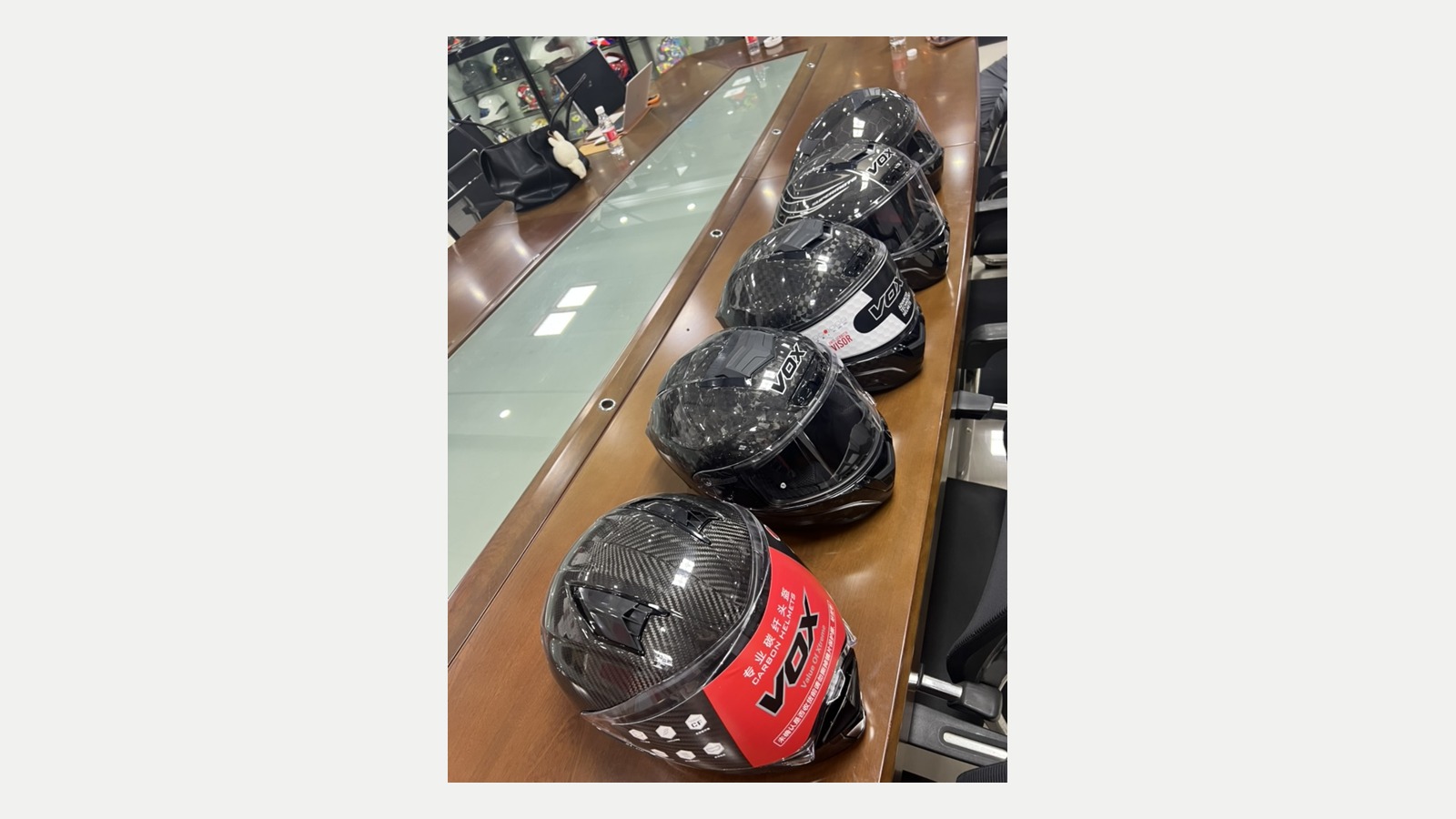
Photo: motorcycle helmet samples photographed during a Taotao business visit. Context only; no model identity, material or certification is established by this image.