Sep 24, 2026Industry Insights
Motorcycle Helmet Quotations: Are You Comparing the Same Configuration?
Before choosing the lowest motorcycle helmet quotation, align the shell, size range, visor, liner, accessories, packaging, document scope and change-control terms.
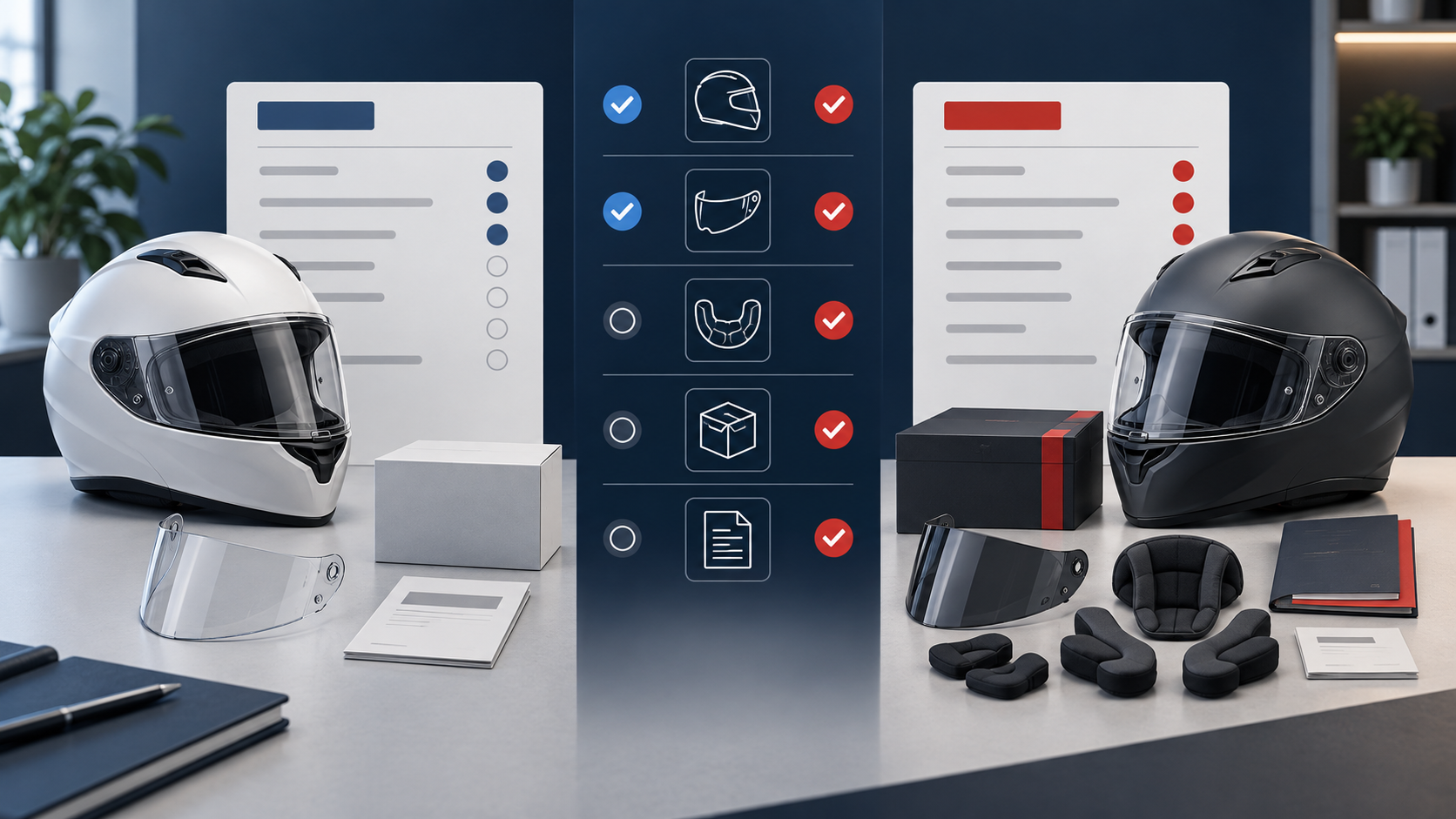
A motorcycle helmet quotation can look complete while leaving the most expensive differences unstated. Two suppliers may use the same model name and show a similar shell, yet quote different visor options, liner materials, size coverage, packaging, accessories or document scope.
For an importer or private-label buyer, the first pricing question is not “Which unit price is lower?” It is “Are these offers for the same controlled configuration?”
Cover illustration: AI-assisted editorial artwork. It is not a product photograph, factory record, test result or certification evidence.
1. Give the quotation one configuration reference
Start with a model, revision and dated specification sheet. Do not rely on a catalogue photo as the full order description.
- Helmet type and exact model reference
- Shell material and construction stated by the supplier
- Size range and shell-size allocation, if available
- Retention system and closure type
- Main visor, sun visor and replacement-visor options
- Ventilation, liner and removable-part requirements
- Colour, artwork and logo scope
- Target market and documents the buyer needs to review
If a field is unknown, write “to be confirmed.” A blank field should not be converted into an assumption during price comparison.
2. Separate included parts from optional parts
Ask each supplier to mark every item as included, optional or excluded. This is especially important for spare visors, anti-fog inserts, breath guards, chin curtains, peak parts, extra liner sets, retail boxes and instruction materials.
A lower unit price can simply mean that the quote excludes components included elsewhere. Use a line-by-line table and compare the landed commercial scope rather than one number.
3. Match evidence to the exact configuration
For markets applying UN Regulation No. 22, the regulation covers protective helmets and their visors through defined approval and marking provisions. A general “ECE” statement does not show that a document applies to the exact shell, visor and configuration being offered.
Request the model-specific document set you need to review. Check the model or type reference, approval holder or responsible entity, applicable series, document date, scope and relevant markings. If the supplier cannot link the document to the offered configuration, keep the point open.
This check does not turn a sourcing agent into an approval authority. Final regulatory interpretation belongs with the relevant authority or a qualified specialist for the destination market.
4. Fix the sample reference before bulk production
A sample can help confirm appearance, fit, included parts, packaging and the agreed commercial configuration. It does not prove that every production unit will perform identically or establish regulatory compliance.
- Model and revision
- Photos of the shell, visors, liner, retention system, labels and packaging
- Size and colour reference
- Included and optional accessories
- Open deviations and their disposition
- The approval step required before a supplier changes a component, material, factory, marking or package
Keep the approved sample or an equivalent traceable reference available for the production and pre-shipment check.
5. Compare MOQ, tooling and packaging on the same basis
MOQ and tooling terms depend on the model, colour split, artwork, packaging and current factory plan. Do not infer a number from another helmet or a previous order.
- Base product MOQ and colour allocation
- Sample terms
- Artwork, mould, plate or setup charges
- Retail-box and master-carton scope
- Label, instruction and barcode work
- Lead-time basis and the event that starts the clock
- Payment milestone and delivery term
If these points are not confirmed, keep them as “to be confirmed” rather than adding an industry-average figure.
6. Treat quotation gaps as questions, not proof of misconduct
An unusually low offer, unclear factory role or mismatch between the contracting party, manufacturer, exporter and payee deserves clarification. It is not by itself proof of fraud or financial weakness.
The practical response is to request the missing evidence, compare the scope again and document the supplier's explanation. That is how a bank-informed risk approach becomes useful in sourcing: observable inconsistencies create questions and controls, not unsupported conclusions.
Use this checklist on the current helmet range
Review the motorcycle helmet and visor catalogue, including F605, F606 and F609. Product-page information is a starting point; confirm the exact model, documents, MOQ, sample terms, lead time and packaging in the quotation.
If you want two helmet quotations normalized before a deposit decision, contact Taotao Trading or message Katherine on WhatsApp. Send the target market, model references, quantity estimate and redacted quotation scope. Remove bank details, personal data and confidential customer information first.
Official references
Compliance note
This article is a buyer-side sourcing checklist, not product certification, laboratory testing, legal advice or regulatory approval. Confirm the requirements for the exact helmet configuration and destination market before placing it on the market.