Oct 13, 2026Industry Insights
Private-Label Bicycle Helmet for the U.S.: Check the Label Before You Approve the Sample
Before approving a private-label bicycle-helmet sample for the U.S., match its final configuration, certification label and supporting test records.
An OEM bicycle-helmet sample can look finished while the labeling plan is not. For a U.S. private-label program, the next approval question is not merely “Does the shell look right?” It is “Will this precise configuration, its paperwork and its finished-unit label stay connected?”
The CPSC bicycle-helmet guidance describes 16 CFR part 1203, including product testing, certification labeling and records. It says helmets are tested in the condition offered for sale and discusses attachments supplied by the manufacturer. That makes a visor, light, brim or other offered accessory a specification question, not a decoration to add after the sample is signed off.
Put five fields on the sample-approval sheet
1. Model and size: the supplier’s model code, size range and revision on the sample, quotation and test record.
2. Offered configuration: shell, retention system, supplied accessories and the exact product marketed to U.S. buyers.
3. Responsible party: the company that will issue the relevant U.S. certificate and appear on the label.
4. Label proof: responsible-party details, foreign manufacturer when applicable, production-lot identifier and month/year of manufacture.
5. Record access: where the test records for the identified configuration and lot will be held and how the importer can retrieve them.
This is Taotao’s purchasing checklist, not an official certificate template. The CPSC explains the label content and test-record obligations in its business guidance. An OEM color or logo change does not by itself prove that the new configuration is within the existing test scope; obtain written confirmation before relying on it.
One model example, without assuming approval
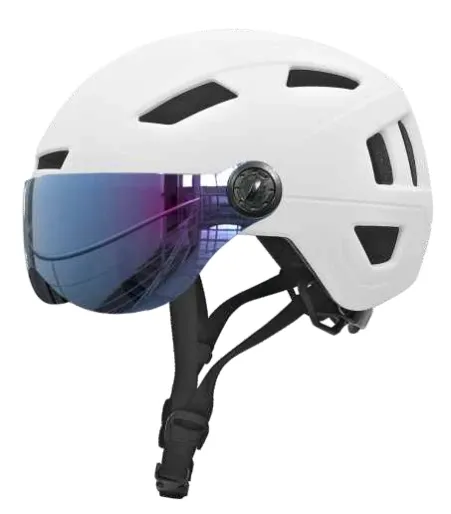
Taotao’s HS66 city helmet listing illustrates the kind of visor-equipped bicycle product for which a buyer should request a configuration-specific evidence pack. The listing is an inquiry starting point. We have not treated its marketing description or a product photo as verified U.S. certification for the exact variant you intend to order. MOQ, lead time, certificate holder and test scope remain to be verified against your requirements.
If the intended product is primarily for children 12 or younger, the importer should review CPSC’s Children’s Product Certificate guidance, including third-party testing by a CPSC-accepted lab. For a general-use product, check the general-use certificate route. A lab’s presence in the CPSC directory is not proof that a particular report covers this helmet.
Continue, pause or escalate
Continue when the final configuration, intended user, records and label proof all match. Pause when the supplier cannot link the sample or label to the proposed production lot. Escalate a children’s-product, attachment or test-scope ambiguity to a qualified U.S. compliance specialist before production approval.
Send Taotao Trading your target market, intended user and redacted model/configuration sheet through our contact page for an evidence-gap review. Do not send bank data or another customer’s confidential report.
Image caption: Bicycle-helmet product photo from Taotao’s existing site assets. The photo is not evidence of CPSC compliance for a specific model.